Chris Amow
501afb7792
Chris Amow
501afb7792
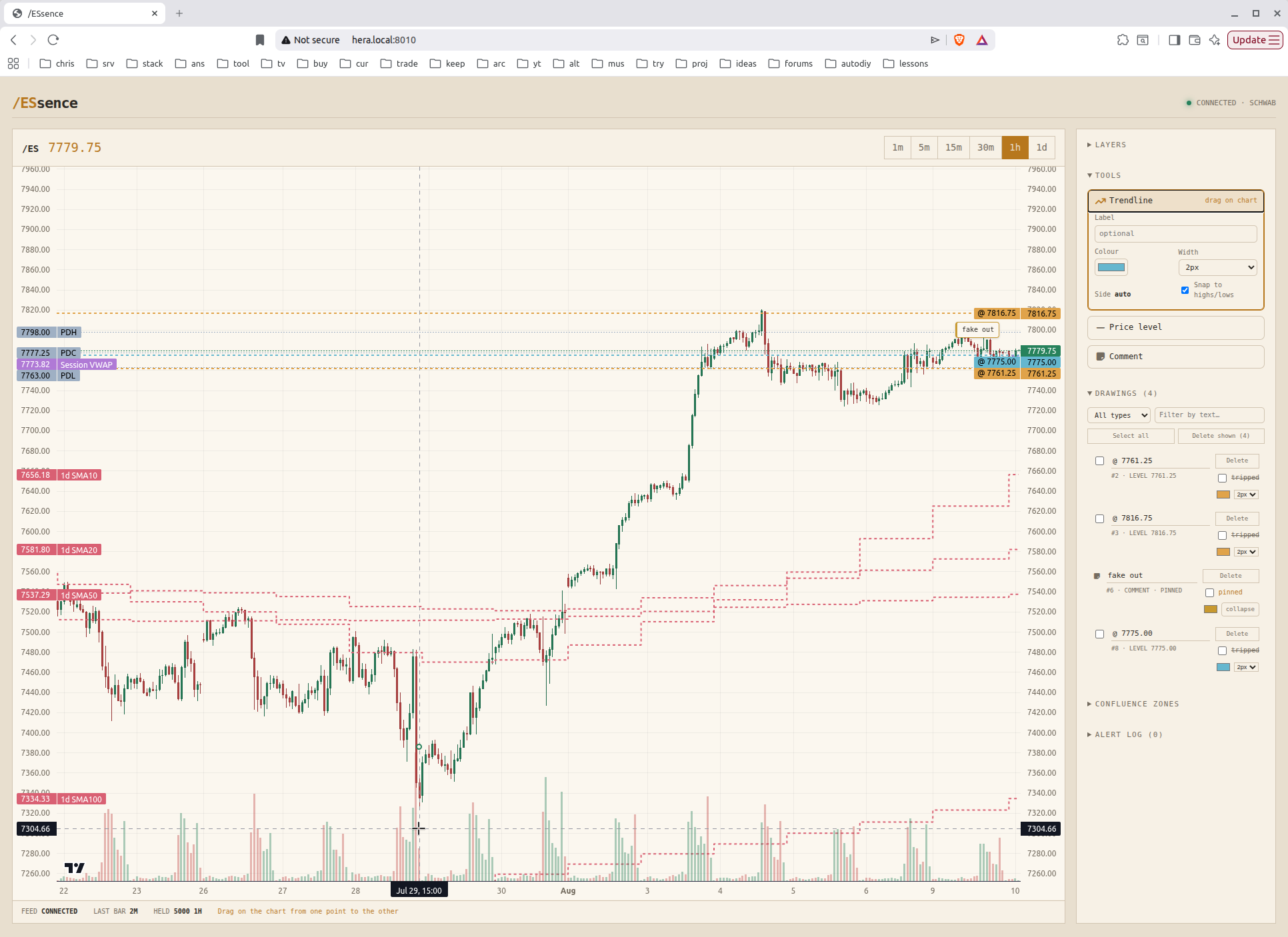
Snapping took the bar sharing the cursor's time and then its nearer extreme,
which ignored how far away that extreme was. Pointing below a candle snapped to
that candle's low however distant, while the extreme genuinely under the cursor
was never considered. Zoomed out to some 360 bars at three pixels apart, that
made hitting the bar you meant a matter of several tries. snapPoint now scans
six bars either side and takes the extreme nearest in pixels.

Proven by probe: with the cursor sitting exactly on one bar's low but nudged two
pixels so coordinateToTime resolves to its neighbour, the snap takes the extreme
under the cursor rather than the neighbour's.

A report of the snap dot appearing "way above the bar" turned out to be the dot
landing correctly on the low while the cursor was 151 points below it: the right
price scale keeps a bottom margin of 0.1 and the volume overlay is drawn in it,
so the lower fifth of the pane sits below every candle.

bin/e2e runs tests/e2e against the dev stack inside the playwright service —
Node's own test runner, no dependency added here, since Playwright is global in
that container. Eleven cases, each one a bug that shipped: the viewport parked
ten hours in the past, hourly candles drawn as slivers, stale bar events
throwing, comments drifting across a timeframe switch, and three ways a
trendline anchor could disagree with its preview. Not one was reachable from
pytest. Tests delete any drawing they create, because the dev store is shared
with whoever is looking at the app.

Co-Authored-By: Claude Opus 5 <noreply@anthropic.com>
216 KiB
1932x1406px
216 KiB
1932x1406px